Juneau is wet in every month and cool even in summer: NOAA’s normals for the airport count about 230 days a year with measurable precipitation, July’s normal high is 64.0°F, and it is colder again on a glacier or out on the water. This page is for both kinds of visitor: the cruise passenger with one day in port, who has to dress for that day’s weather and a tour on the water or the ice, and the independent traveler choosing a month. It gives the climate month by month, what cloud and rain mean for a helicopter or a floatplane, and what to pack for each kind of tour.
The figures are the 1991–2020 normals of NOAA’s National Centers for Environmental Information (NCEI) for the weather station at Juneau International Airport; the summer pattern is from the 2016 summer climate guide of the National Weather Service’s Juneau office (NWS Juneau).
Juneau weather by month
Each figure is a normal, an average over the 30 years from 1991 to 2020: the normal high is the average of a month’s daily highs, and a day counts toward a column when that much precipitation or more falls at the airport.
| Month | Normal high | Normal low | Precipitation | Days with 0.01 in or more | Days with 0.1 in or more | Snow |
|---|---|---|---|---|---|---|
| January | 33.1°F | 23.8°F | 6.02 in | 20.4 | 13.4 | 24.5 in |
| February | 35.7°F | 24.6°F | 4.31 in | 16.8 | 10.3 | 16.7 in |
| March | 39.2°F | 26.6°F | 3.67 in | 17.8 | 10.9 | 12.4 in |
| April | 48.7°F | 32.9°F | 3.47 in | 17.2 | 9.4 | 1.2 in |
| May | 57.6°F | 40.3°F | 3.51 in | 16.1 | 9.0 | 0.0 in |
| June | 62.4°F | 46.8°F | 3.82 in | 16.7 | 8.8 | 0.0 in |
| July | 64.0°F | 50.1°F | 5.14 in | 18.5 | 11.6 | 0.0 in |
| August | 62.9°F | 49.1°F | 6.41 in | 19.4 | 13.5 | 0.0 in |
| September | 56.1°F | 44.1°F | 9.15 in | 22.3 | 17.0 | 0.0 in |
| October | 47.3°F | 37.1°F | 8.42 in | 23.0 | 17.0 | 0.9 in |
| November | 38.3°F | 29.2°F | 6.54 in | 20.9 | 14.3 | 13.8 in |
| December | 34.7°F | 25.9°F | 6.53 in | 21.1 | 13.9 | 18.1 in |
| Year | 48.3°F | 35.9°F | 66.99 in | 230.2 | 149.1 | 87.6 in |
What the table says, season by season:
- Summer is mild, not warm. From June to August the normal highs run from 62.4 to 64.0°F and the lows from 46.8 to 50.1°F. NWS Juneau’s guide says that with persistent cloud cover and cool ocean water close by, “70°F is considered warm” in Southeast Alaska; in the record hot summer of 2004, Juneau had 42 days of 70°F or more.
- April to June is the driest stretch. These months have the fewest days with 0.1 inch or more, 8.8 to 9.4 a month, and April and May the least precipitation, 3.47 and 3.51 inches; NWS Juneau calls the three months “a distinct dry season”.
- Fall is the wettest. September brings 9.15 inches and October 8.42, with 0.01 inch or more on 22.3 and 23.0 days.
- Winter brings snow. The airport averages 87.6 inches of it a year, nearly all of it from November to March and the most in January, 24.5 inches; none falls from May to September.
When the whales, the salmon and the bears are about, and how the months compare for a visit, is on the best time to visit Juneau.
Does it always rain in Juneau?
Not always, but on most days. In a normal year the airport records 0.01 inch or more of precipitation, rain or snow, on about 230 days, and 0.1 inch or more on 149. Even May, the month with the fewest, has 16.1 days with some, and June, the month with the fewest days of 0.1 inch or more, has 8.8. So plan on rain whatever the month.
For the days you are here, take the forecast, not the averages. NWS Juneau posts its forecasts at weather.gov/ajk, and its guide’s last word to anyone hiking or kayaking is that “monitoring the weather forecast is a must!”
Juneau weather in July
July is the warmest month at the airport, with a normal high of 64.0°F and a normal low of 50.1°F, and it is wetter than June: 5.14 inches, with 0.01 inch or more on 18.5 days. NWS Juneau’s guide says “the cloud cover and persistent rains of July mark the end of the dry season during a ‘typical summer’ in Southeast”, and that the hottest days normally come in June and July, when the days are longest. Thunderstorms are rare: Juneau averages one every two years.
August is almost as warm, with a normal high of 62.9°F, and wetter again, at 6.41 inches. In August, the guide warns, “storm systems tend to get stronger and gales occur more frequently”, and they often move in fast.
Cloud, rain and flying weather
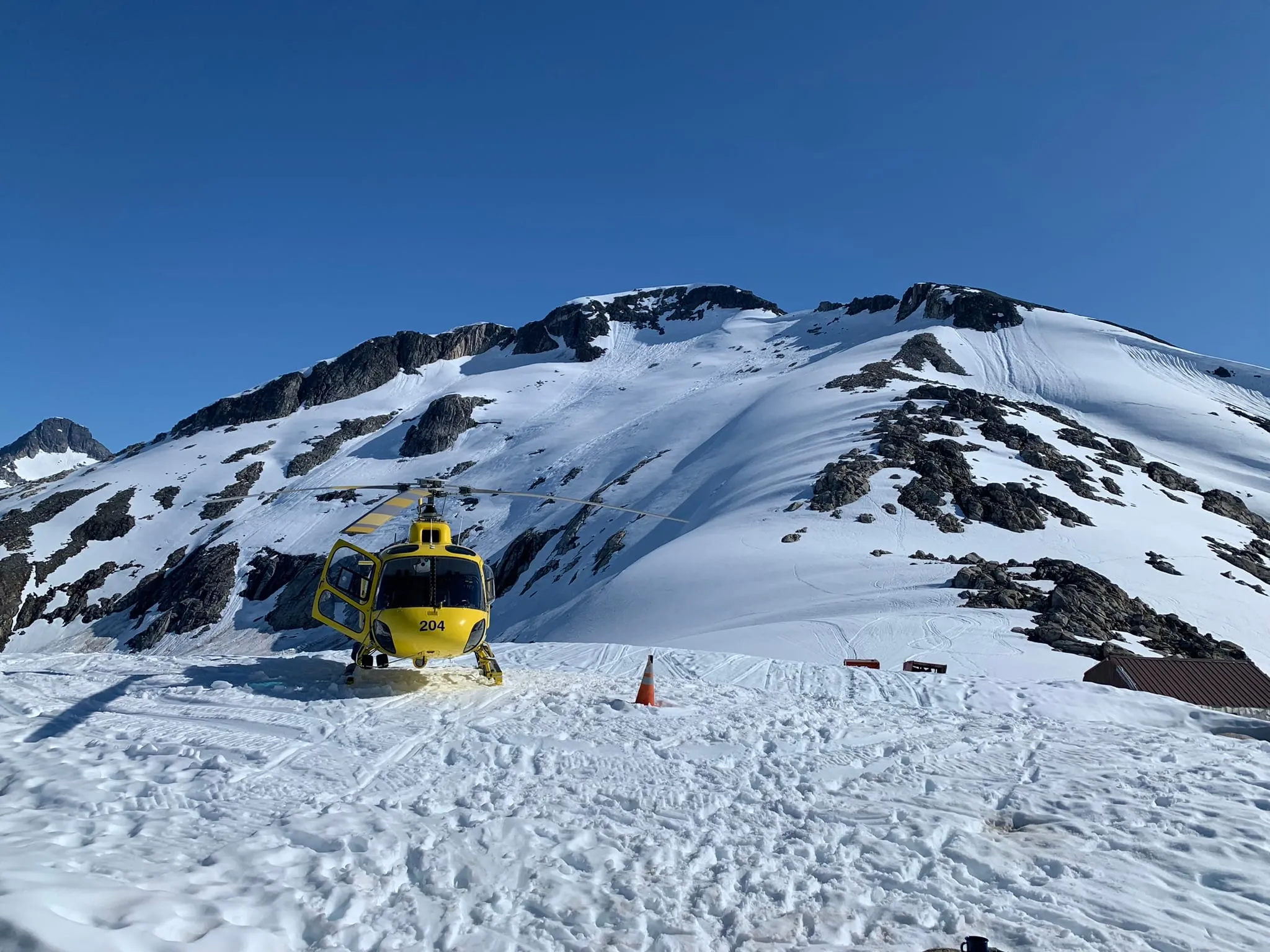
Helicopters and floatplanes fly only in flying weather, and cloud forms over the ridges they cross. NWS Juneau explains it: air moving in off the ocean is driven up mountains that top out at about 3,500 to 6,000 feet in Southeast Alaska, cools about 3 to 5 degrees for every 1,000 feet it rises, and its moisture condenses into clouds over the ridges. No average tells you whether your flight will go: that is the company’s call, and TEMSCO, in most cases, does not make it until within an hour of departure.
What each company does when it cannot fly, in its terms on the platform we link it through:
- TEMSCO Helicopters (FareHarbor): “If we are unable to fly a tour due to weather, our guests will receive a full refund. In most cases we will not make the decision to cancel a tour until within an hour of departure, as the weather can quickly change”.
- NorthStar Trekking (FareHarbor): “Weather in Juneau can often be overcast and rainy. Decisions to operate tours are based on safety and tour quality. Should we decide not to operate your scheduled tour we will do our best to reschedule. If this is not possible, you will be refunded in full.”
- Coastal Helicopters (Viator): “Subject to favorable weather conditions. If canceled due to poor weather, you will be given the option of an alternative time or full refund”.
- Wings Airways (Viator): “All flights are approximate and subject to change due to weather”, and Viator lists both of its seaplane trips as ones the operator may cancel for bad weather.
- Above & Beyond Alaska, on its Norris Glacier fly-in: on Viator, “This trip operates in all weather conditions (barring unsafe conditions, to be determined by ABAK)”; on FareHarbor, it may cancel for “unsafe weather or route conditions”, with a full refund if the trip has not started.
Canceling yourself because the forecast looks gray is a different matter. TEMSCO and NorthStar keep 10% of a cancellation until 24 hours before the flight and refund nothing inside 24 hours; Coastal’s trips on Viator refund in full until 72 hours before and nothing after; Wings, on Viator, refunds in full until 24 hours before. Above & Beyond’s Norris trip refunds in full until 24 hours before on Viator, and until 72 hours before on FareHarbor.
On a one-day cruise call there may be no later flight to move to, so plan on the refund and keep a plan on the ground for the same hours. Staying in Juneau, fly early in your stay, so a grounded day can move to another. The companies and their trips are compared on Juneau helicopter glacier tours and Juneau seaplane tours, and the floatplanes to the bears wait on the same weather, on Juneau bear viewing tours.
Colder on the ice and on the water
The temperature in town is not the temperature where most tours go.
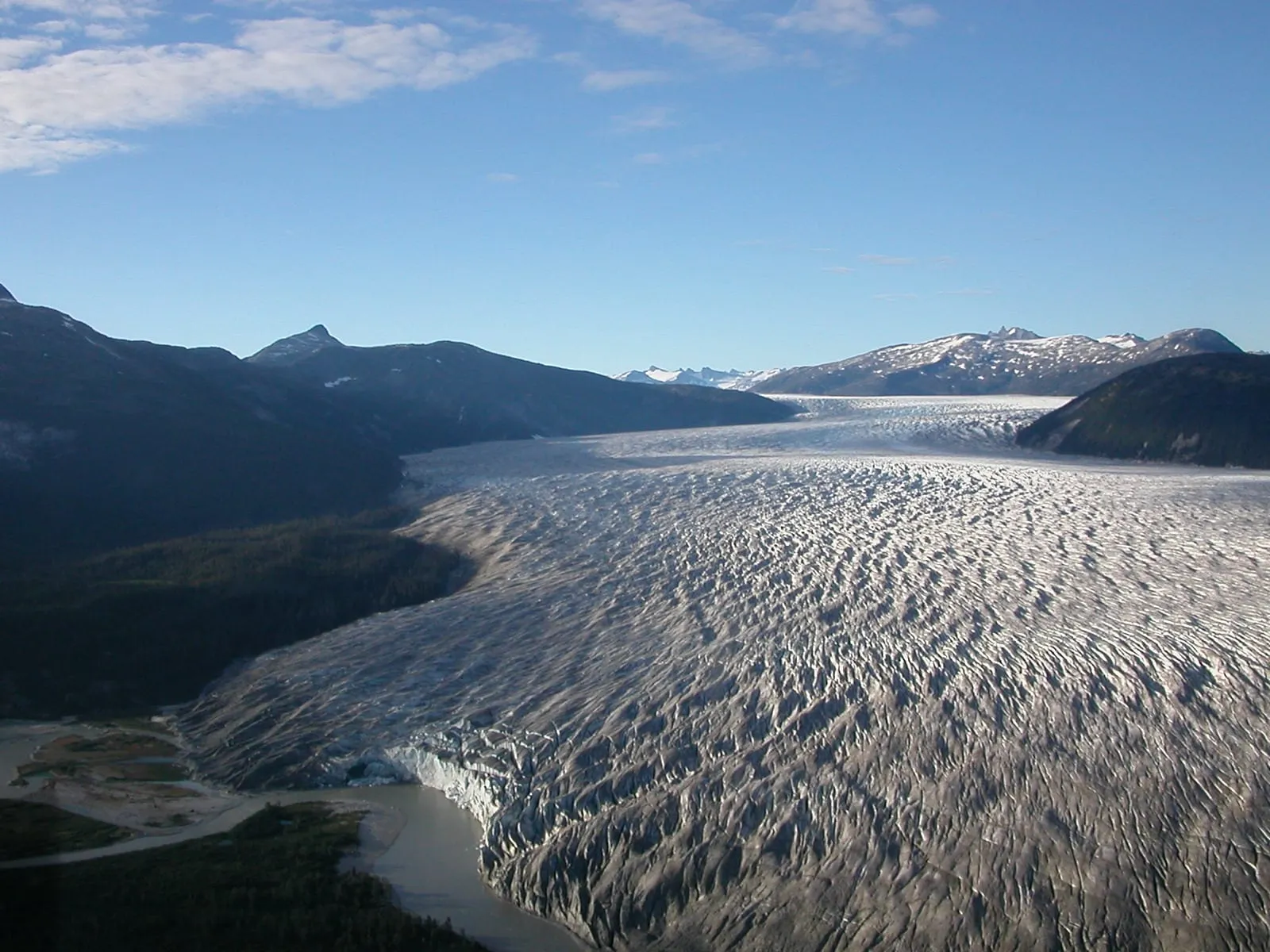
- On a glacier. TEMSCO tells its passengers to expect at least 10°F less on the glacier than in town, with heavy winds; NorthStar says to dress for “a 10–15°F temperature decrease from sea level (at the cruise ship docks) to the glacier”. On a day at July’s normal high of 64.0°F, that is about 49 to 54°F on the ice. NWS Juneau adds that in the mountains “near freezing temperatures are possible, so dressing in layers is important”, even in summer.
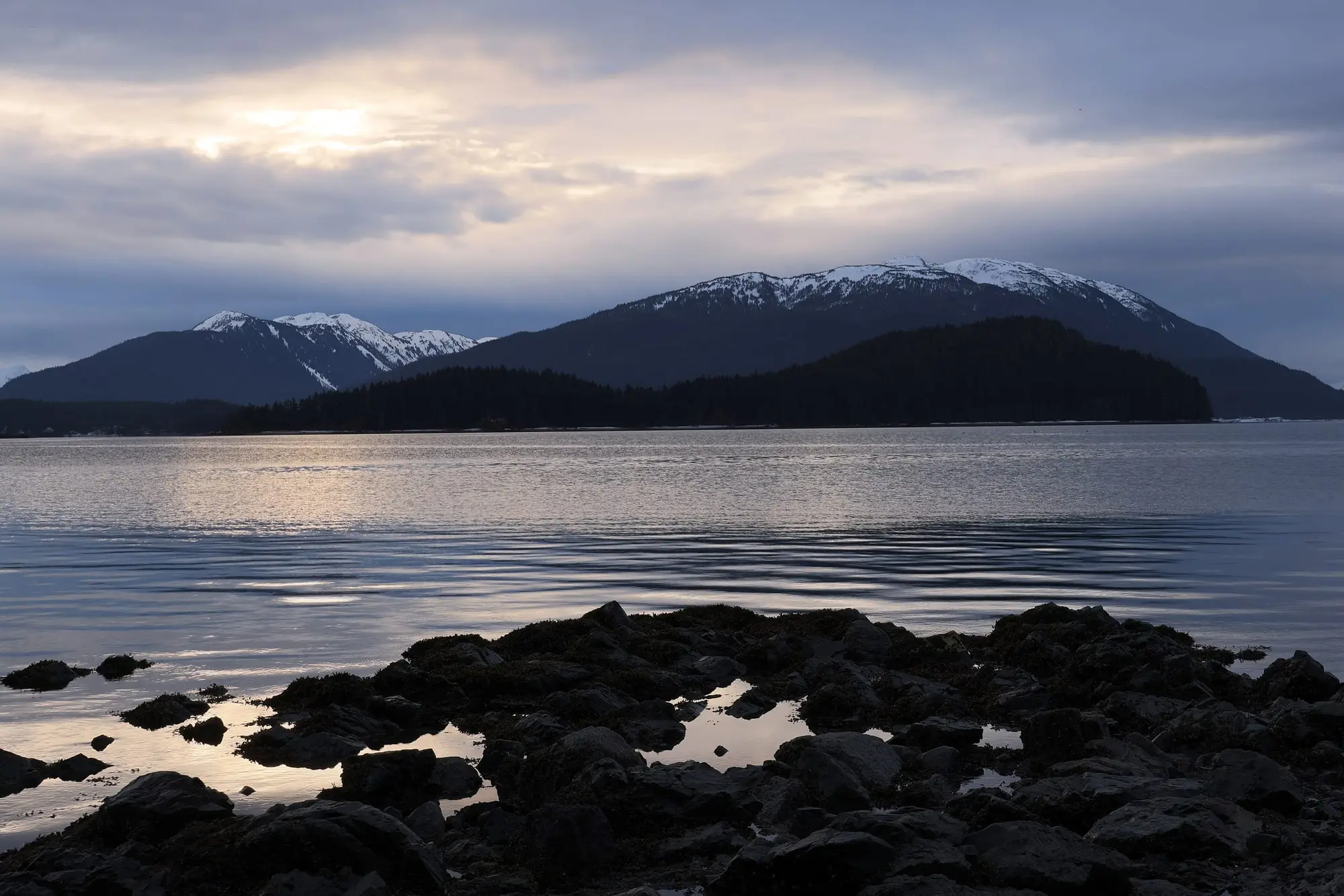
- On the water. NWS Juneau says the water in Southeast Alaska generally stays below 60°F in summer, that extreme tidal currents and cold water are usually the major hazards to summer mariners, and that “even on sunny days, light winds combined with cooler air temperatures over water make jackets a good idea.” The big whale boats of Juneau Tours and Harv and Marv’s have heated cabins; on Paddle Juneau’s sea kayaks everyone wears a dry suit.
What to pack for Juneau
For any day in port or in town, whatever the month:
- A waterproof jacket with a hood. Juneau Tours, Harv and Marv’s and Juneau Whale Tours all ask for a waterproof outer layer on their whale boats, and TEMSCO’s word for the glacier is “don’t forget a raincoat!”
- Warm layers of wool, fleece or synthetic, not cotton or denim. Above & Beyond Alaska asks for them because of the cool, damp climate, and Liquid Alaska Tours for non-cotton layers with a beanie and wool socks.
- A warm hat and gloves, even in July: TEMSCO recommends both for its glacier landing.
- Sunglasses. TEMSCO, NorthStar and Wings each list them.
- Comfortable shoes with a non-slip sole. Juneau Tours asks for “comfortable slip-proof shoes”, and Coastal for rubber-soled shoes such as a light hiking boot or athletic shoes.
- Binoculars and a camera. Coastal lists both.
What each kind of trip lends you, and what its operators ask you to bring, as they listed them on 20 November 2026:
| Trip | Lent or included | Bring or wear |
|---|---|---|
| Whale watching | A heated cabin on Juneau Tours’ and Harv and Marv’s boats | Warm layers, a waterproof jacket or shell and non-slip shoes; the boats go out in all weather |
| Helicopter glacier landing | Overboots (TEMSCO); overshoes, and raincoats as needed (Coastal); rain jacket and pants, gloves, mountaineering boots, crampons, a harness and a trekking pole (NorthStar) | Warm layers, a hat, gloves and sunglasses, with walking shoes under the overboots; TEMSCO lends no clothing, and Coastal keeps a no-bag policy, holding bags at its base during the flight |
| Seaplane | Rain gear, rubber boots and the paddling and glacier gear on Above & Beyond’s Norris trip | Layers, comfortable walking shoes and sunglasses (Wings, which bars bear spray on its seaplanes); no cotton or denim on the Norris trip, and each passenger’s rain gear and shoe sizes when you book |
| Canoe and kayak | Rain jacket, pants, boots, gloves and a life jacket (Liquid Alaska Tours’ canoe); full rain gear with boots (Alaska Travel Adventures’ lake kayak); a dry suit and footwear (Paddle Juneau) | Warm non-cotton layers, a beanie and wool socks; your own warm layers under Paddle Juneau’s dry suit |
| Glacier hikes | Rain jacket and pants, waterproof boots, a life vest, a helmet and a trekking pole (Liquid Alaska Tours); a backpack and rain gear (Above & Beyond’s hike) | Warm non-cotton layers, a beanie, wool socks and gloves; your own sturdy hiking boots with ankle support on Above & Beyond’s hike |
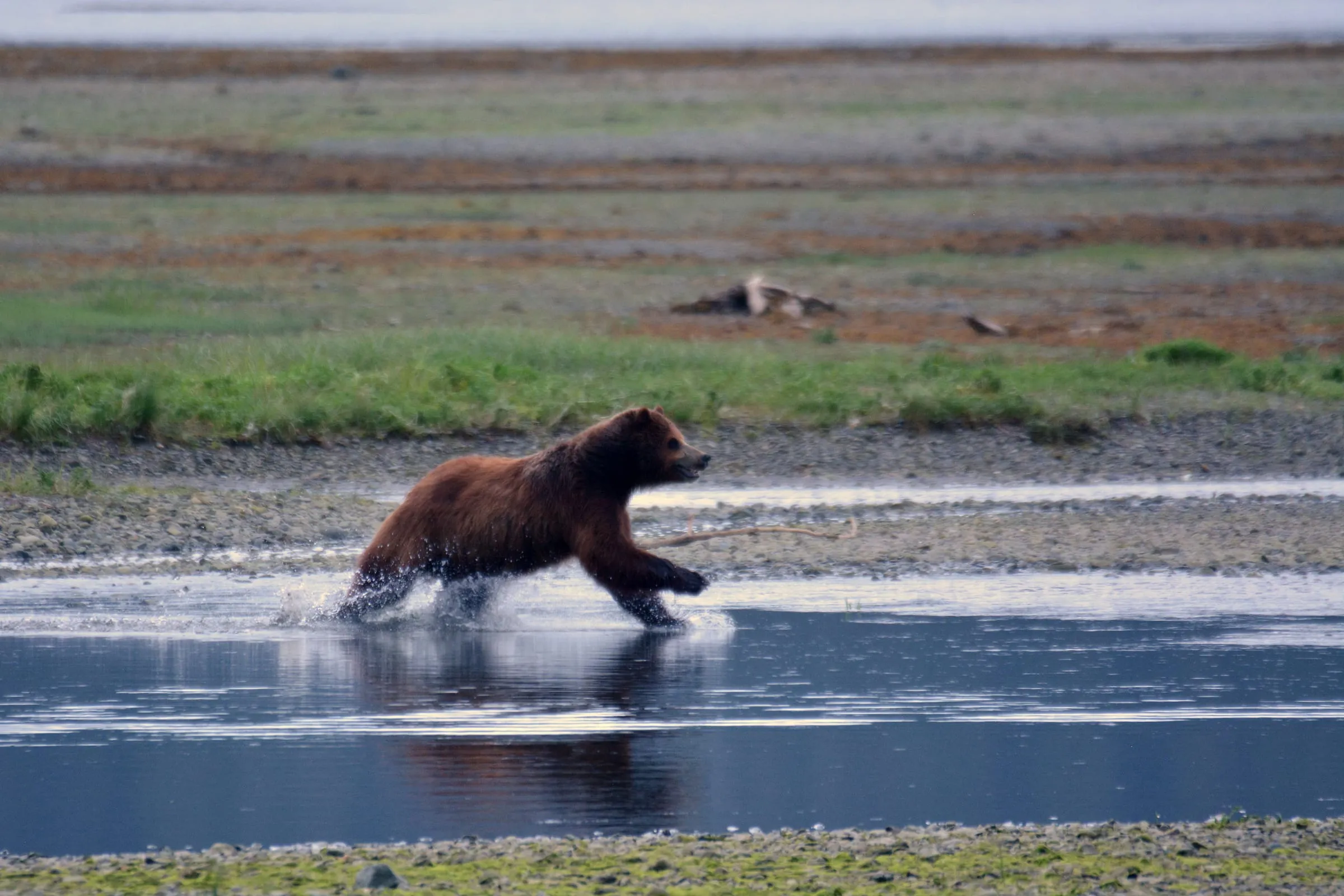
| Bear viewing | Rain gear, jackets and rubber boots on Above & Beyond’s Pack Creek trip | Layers for a day outdoors: it goes in all weather, barring unsafe conditions |
Coming in winter, pack for freezing: from December to February the airport’s normal lows run from 23.8 to 25.9°F and its highs from 33.1 to 35.7°F. What is open then is on Juneau in winter.